
QR payments in Armenia: what is more convenient in 2026 – a digital wallet, banking app or card?
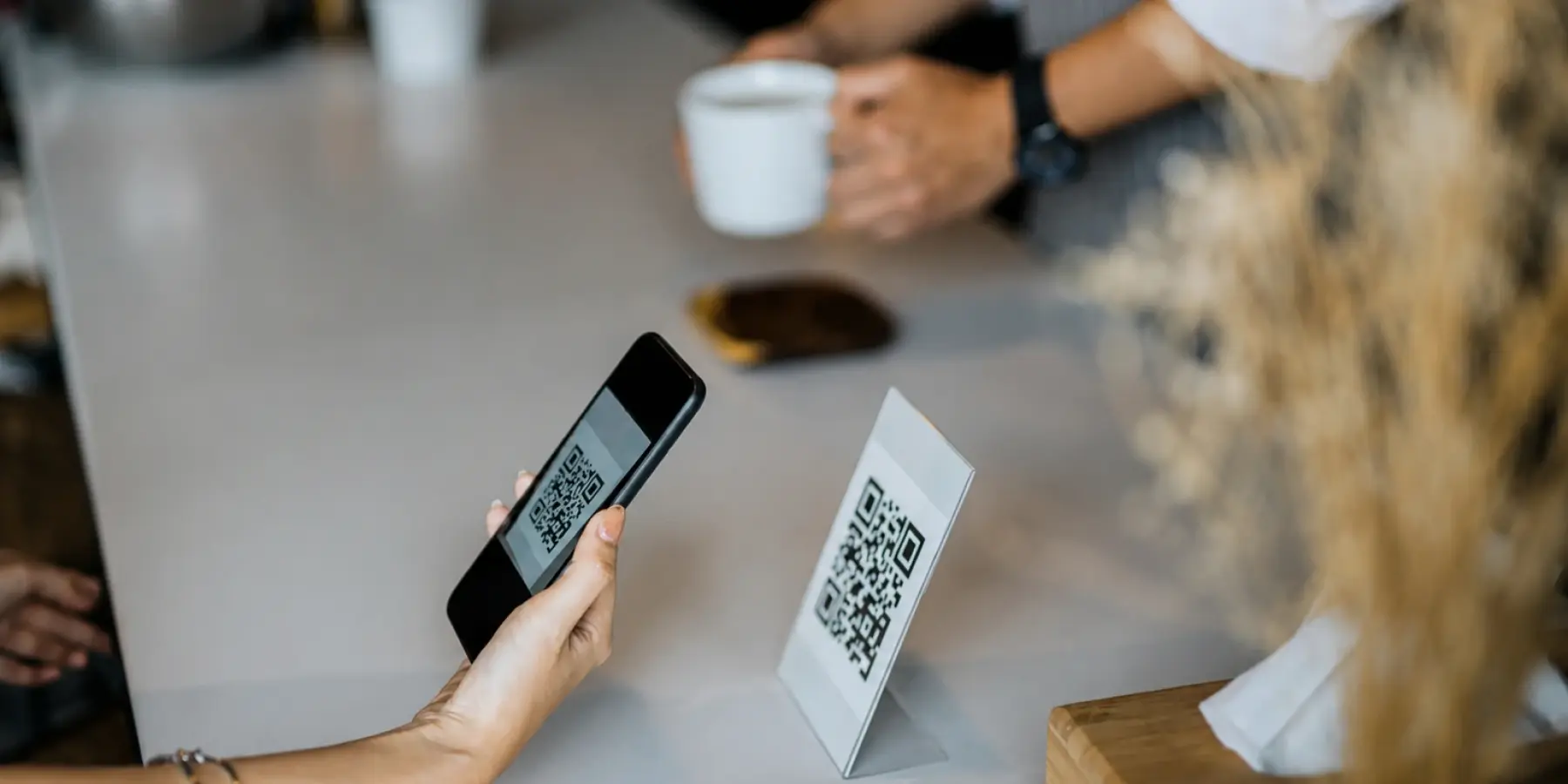
In Armenia, you can pay for a purchase or service electronically in several ways: scan a QR code through a digital wallet, use a banking app or tap your card on a terminal. At first glance, these methods look similar: the money is debited without cash, and the transaction takes only a few seconds. However, their features differ significantly.
In this article, we explain which option to choose in 2026 and in which situations a digital wallet, including easywallet, may be more practical than a banking app or card.
Key takeaways
For regular purchases at the checkout, the fastest option is usually a bank card: you simply tap the card, smartphone or smartwatch on the POS terminal.
For managing accounts, transfers, loans and deposits, a banking app is more convenient because it is directly connected to the products of a specific bank.
For QR payments and regular expenses, a digital wallet is often more practical: one app can be used to pay for utilities, mobile services, fines, tickets and other everyday expenses. For example, easywallet also allows users to pay for purchases through Idram’s QR infrastructure.
For most users, the best option is not to choose just one tool, but to use a card, banking app and digital wallet for different purposes.
AFM assessment methodology
Since QR payments are not available in all banking apps, it would be incorrect to compare only this payment method. Therefore, in this article, we compare digital wallets, banking apps and cards primarily in the context of a regular in-store purchase.
We assess how many actions are required to make a payment, how quickly the transaction is completed, whether the user needs to open an app, where each payment method is available and how convenient it is to use at the checkout. We then compare the additional features of each tool for other everyday payments.
How QR payments work in Armenia
A QR code contains the information needed to process a payment. In Armenia, users most often scan the merchant’s QR code themselves or show a QR ticket in public transport, concert halls or theatres.
Open QR infrastructure plays an important role in the development of the market. It allows customers of connected financial institutions to pay for purchases through a shared QR code, without installing a separate app for each merchant.
For example, easywallet is integrated with Idram’s open QR infrastructure. Thanks to this, wallet users can scan Idram QR codes and pay for purchases at connected retail and service locations directly through easywallet.
For customers, this means that the digital wallet’s capabilities are not limited to EasyPay’s own service catalogue. The app can also be used for offline payments within a partner QR infrastructure, provided that the specific location and transaction support this payment method.
Digital wallet: maximum everyday payments in one place
A digital wallet is a separate payment app. Its main purpose is not to manage a bank account, but to bring different types of payments together in one interface.
In Armenia, a digital wallet can be used to pay for:
- electricity, gas and water;
- mobile services, internet and TV;
- state and municipal services;
- fines, parking and vehicle taxes;
- loans and insurance services;
- event tickets;
- purchases at retail locations via QR code;
- money transfers;
- other everyday services.
This is especially convenient when a person has accounts with different banks but does not want to open several apps to pay for different services.
One example of this approach in the Armenian market is easywallet - a digital wallet that combines payments for everyday services, QR payments and additional services in one app. Let’s take a closer look at how this format differs from a traditional banking app.
How easywallet differs from a banking app
easywallet combines a digital wallet, a payment catalogue and additional services. The app provides access to more than 1,000 services, while over 200 types of payments can be made with no fee. Users can top up their wallet in cash through a network of more than 4,000 EasyPay terminals.
Key advantages of easywallet:
- QR payments: the app supports QR code payments and is integrated with Idram’s open QR infrastructure;
- wide service catalogue: one app can be used to pay for utilities, state, financial, insurance and other services;
- terminal network: the wallet can be topped up in cash through EasyPay terminals;
- saved payment details: regular payments do not have to be entered manually every time;
- Easy Garage: the app includes separate features for managing vehicle-related expenses;
- EasyEvents: users can buy tickets to concerts, performances and other events;
- bank card support: users can link a card and use it as a source of funds;
- transaction history: all payments can be tracked in one place.
Therefore, easywallet is especially useful not as a replacement for a bank account, but as a single access point for different everyday payments.
When a digital wallet is more convenient
A digital wallet is worth choosing if you:
- regularly pay several utility bills;
- use services from different operators and providers;
- want to pay by QR code in shops and cafés;
- prefer to see different expenses in one app;
- sometimes top up your balance in cash;
- pay vehicle-related expenses, fines or taxes;
- want to save templates for regular payments;
- do not want to depend on the functionality of one bank’s app.
Banking app: convenient for managing your finances
A banking app is primarily designed to manage the products of a specific bank. It allows users to check their balance, transfer money, open accounts, manage cards, repay loans and place deposits.
Depending on the bank, the app may also support utility payments, QR payments, mobile top-ups and other services.
Advantages of a banking app
A banking app is convenient when you need to:
- check the balance of an account or card;
- transfer money between your own accounts;
- send money to another customer;
- manage card limits;
- temporarily block or reissue a card;
- repay a loan;
- open a deposit or account;
- get an account statement;
- exchange currency;
- pay for a service directly from your account.
The main advantage of this type of app is its direct connection to a bank account. The user does not need to top up a wallet separately: the money is debited from the selected account or card.
Where a banking app falls behind a digital wallet
The payment catalogue depends on the specific bank. One app may include many service providers, while another may offer only basic categories. In addition, banking apps are usually focused on the bank’s own products. If a user has several cards and accounts with different banks, they have to switch between apps.
In this respect, a digital wallet may be more convenient: users can link several cards from different banks and pay for services through one app.
When a banking app is the better choice
A banking app is more practical if you:
- mainly manage accounts with one bank;
- often transfer money;
- exchange currency;
- manage loans and deposits;
- do not want to top up a digital wallet in advance;
- pay for goods and services directly from your account.
Bank card: the fastest way to pay at a regular checkout
A bank card remains one of the most universal payment tools. In shops and cafés, it is usually enough to tap your card, smartphone or smartwatch on the POS terminal.
For a regular purchase, a contactless card may be faster than a QR code. The user does not need to open an app, find the payment section and launch the camera.
Advantages of a bank card
- accepted at a large number of retail locations;
- suitable for online purchases;
- does not require a separate digital wallet balance;
- supports contactless payments;
- may offer cashback, bonuses or other bank privileges;
- often works outside Armenia.
Limitations of a card
A card by itself does not bring different services together. To pay for electricity, mobile services, a fine or a loan, the user usually needs to open a banking app, the provider’s website or a digital wallet.
In addition, a card does not always help users quickly understand where it is more cost-effective to make a specific payment and whether a fee applies. These terms depend on the bank, payment service and service provider.
When a card is more convenient
Choose a card if you:
- pay for regular purchases through a POS terminal;
- do not want to open an app at the checkout;
- make purchases abroad;
- pay for goods in foreign online stores;
- receive attractive cashback from your bank.
What is more convenient for different tasks
| Task | Digital wallet | Banking app | Card |
| Payment at a regular POS terminal | May not be available everywhere | Usually through a linked card | Most convenient |
| QR code payment | Most convenient | Depends on the bank | Usually not available directly |
| Utility payments | Wide range of services | Depends on the bank’s app | Requires an additional service |
| Account management | Limited | Most convenient | Not available without an app |
| Transfers | Available | Usually more options | Requires an app or ATM |
| Payment of fines and taxes | Convenient if the service is available in the catalogue | Depends on the bank | Requires a separate interface |
| Cash top-up | Possible through a terminal network | Through a bank branch or bank terminal | Through an ATM or bank branch |
| Ticket purchases | Available in selected wallets | Depends on the bank | Through the seller’s website or service |
| Trips abroad | Limited functionality | Useful for card control | Most universal |
| All everyday payments in one place | Main advantage | Depends on the bank | No |
What is faster at the checkout: a digital wallet or a bank card?
When paying by QR code, a digital wallet is convenient because the required feature is already built into the app. However, the user needs to complete several steps:
- Open the app.
- Go to the QR payment section.
- Scan the merchant’s QR code.
- Check the recipient and amount.
- Select the source of funds if several options are available.
- Confirm the payment.
- Check the electronic receipt.
When paying by bank card through a POS terminal, fewer actions are required: usually, it is enough to tap the card, smartphone or smartwatch. That is why, for a regular in-store purchase, a contactless card is often faster.
At the same time, a digital wallet offers more functionality: in addition to QR purchases, it can be used to pay for utilities, mobile services, fines, tickets and other everyday expenses.
This is the key difference: a card is primarily a payment tool, while a digital wallet is an app that brings together different payment methods, service providers and additional features.
Do you need to choose only one payment method?
In practice, it is more convenient not to give up your card or banking app, but to use each tool for the task it is best suited for.
The optimal combination may look like this:
- easywallet – for QR payments, utilities, mobile services, fines, tickets and other regular expenses;
- banking app – for transfers, account management, loans, deposits and currency exchange;
- bank card – for contactless payments at POS terminals, online purchases and trips abroad.
This approach allows you not to limit yourself to the capabilities of one payment system.
For example, you can link a card to easywallet and use the wallet to pay for services that are inconvenient to search for in a banking app. At the same time, the banking app will remain the main tool for monitoring your account and making transfers.
Is there a fee for paying through a digital wallet?
The fee depends not only on the app you choose, but also on the specific service, top-up method and source of funds.
Before confirming a payment, check:
- the amount to be debited;
- the fee amount;
- the recipient’s name;
- the source of funds;
- the final transaction amount.
You should not assume that every payment through a digital wallet or banking app is automatically free of charge. Terms may differ even within the same app.
In easywallet, more than 200 services are available with no fee. However, fees may apply to other transactions. The current amount should always be checked on the screen before confirmation.
How safe are QR payments?
Digital wallets and payment organizations in Armenia operate in a regulated environment. Their activities are supervised by the Central Bank of the Republic of Armenia.
However, security also depends on the user’s actions. To reduce risk:
- download the app only from an official store;
- do not share your password or confirmation code with anyone;
- check the recipient before making a payment;
- do not scan QR codes from suspicious messages;
- set up screen lock and biometric login;
- do not confirm the transaction if the amount differs from what you expected;
- check the electronic receipt after payment.
A QR code itself does not guarantee that the recipient is reliable. It only transmits payment details, so the company name and amount should be checked before confirmation.
Which payment method should you choose in 2026?
For a regular in-store purchase, a bank card still remains the most accessible and fastest payment method, as POS terminals are more common than QR codes. A digital wallet has a different advantage: it brings together QR payments, utilities and other regular payments, transfers and additional services in one app.
For most users, the optimal solution is to combine all three tools. However, if the goal is to manage utility payments, mobile services, fines, tickets and QR payments in one app, a digital wallet offers the broadest and most straightforward use case.
Against this background, easywallet stands out thanks to its combination of more than 1,000 services, a network of over 4,000 EasyPay terminals, integration with Idram’s open QR infrastructure and additional services, including EasyGarage and EasyEvents.
FAQ
Can Idram QR codes be paid through easywallet?
Yes. EasyPay is connected to Idram’s open QR infrastructure. This allows easywallet users to scan Idram QR codes at connected retail and service locations and make payments through the app.
What is faster: a QR code or a bank card?
At a regular POS terminal, a contactless card is usually faster. However, a QR code is more convenient when the payment is linked to a digital wallet, a loyalty programme or a service for which a card alone does not provide the required interface.
Can a bank card be linked to a digital wallet?
Yes, this option is available in easywallet. It allows users to use a bank card as a source of funds while also accessing the digital wallet’s service catalogue.
Do you need a bank account to use a digital wallet?
Digital wallets were designed, among other things, to make payments without the need for full banking services. However, user identification may be required to access all features, and certain transactions may be linked to a bank card or bank account.
Which option is better for utility payments?
A digital wallet is usually more convenient if it brings together different service providers and allows users to save payer details. In easywallet, utilities and other regular payments are available from one app.
Can a digital wallet fully replace a card?
Not in every situation. A card remains more universal for payments through POS terminals, trips abroad and international online stores. A digital wallet is better viewed as a tool that complements a card and simplifies everyday payments.
Conclusion
A bank card, banking app and digital wallet do not fully replace one another because they serve different purposes. A card is faster for regular purchases at the checkout, a banking app is more convenient for managing accounts, transfers, loans and deposits, while a digital wallet helps bring different everyday payments together in one interface.
If you regularly pay for utilities, mobile services, internet, fines, vehicle-related expenses, loans or tickets, a digital wallet can reduce the number of steps and remove the need to use several apps and websites. At the same time, before each transaction, it is important to check the fee, recipient, source of funds and final amount to be debited.
In practice, the most convenient option is to use each tool in the right situation: a card for quick payments through a POS terminal, a banking app for financial control, and a digital wallet for QR payments and regular expenses.
easywallet allows users to combine QR payments and more than 1,000 services in one app. Integration with Idram’s open QR infrastructure expands payment options at retail locations, while a network of more than 4,000 EasyPay terminals makes it possible to top up the wallet in cash.
Compare available payment services on AFM and choose the option that matches your habits, preferred top-up methods and most frequent expenses.
Author
Saty AvagyanSource
AFMTopic
Debit Cards, Credit Cards, Payments and transfers, E-wallets, easywallet